


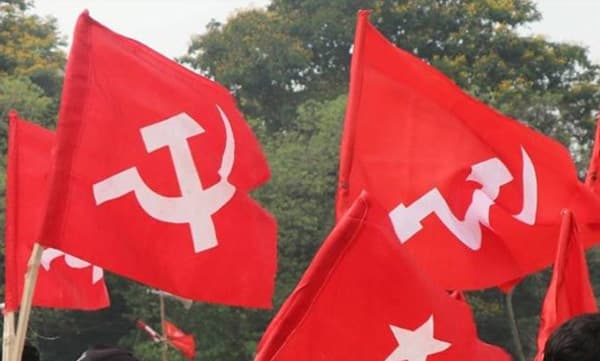
The Verdict as Warning:The Kerala State Assembly election constitutes a stern and
unambiguous admonition to the CPI(M) and the LDF.
It is widely recognized that the LDF’s calamitous electoral setback stems primarily from
pervasive public resentment against Sri. Pinarayi Vijayan’s imperious and feudalistic demeanor
towards the citizenry. The conspicuous absence of a courageous, principled activist within the
Party to subject his conduct and administrative failures to unsparing criticism has precipitated
the organization’s ideological and moral degeneration.
The electoral outcome is unequivocally attributable to popular repudiation of the CPI(M)-led
government. This truth must be candidly admitted and resolutely rectified if the Party seeks
political resurgence.
The CPI(M) must effect a comprehensive overhaul of its present leadership, including the State
Secretary, whose tenure constitutes the most ineffectual and pusillanimous in the Party’s history
since its inception.
The organization must henceforth be steered by principled, ideologically committed cadres of
proven integrity and proletarian commitment.
The universal application of Party discipline is indispensable for restoring organizational
credibility. When policies are formulated and decisions adopted, no individual functionary shall
be granted exemption or impunity.
The unconditional exemption of Mr.Pinarayi Vijayan from Party Programmes, which were
mandatory for all other functionaries, constituted an erroneous decision. The nepotistic and
despotic attitude of Mr.Pinarayi Vijayan, his disregard for Marxist ideology, authoritarianism
within the Party, and his predilection for power and luxurious lifestyles engendered a neo-
bourgeois culture. The rank-and-file Party activists and the common masses refused to tolerate
it. Consequently, they exercised their democratic right to vote against Com. Pinarayi Vijayan,
and in the ensuing political tide, the LDF was swept away.
Party discipline and accountability must apply uniformly to every activist, irrespective of
designation, rank, or past service. The Party is above the individual; the collective is above the
leader.
Reorientation Towards the Masses:
A fundamental reorientation towards the masses is
essential for the Party’s unity and survival. The conduct of Party leaders towards the working
class, the toiling masses, and the common citizenry warrants radical transformation.
The prevailing bureaucratic aloofness, elitism, and commandism must yield to proletarian
humility, democratic ethos, and organic connection with the people.
Renunciation of Bourgeois Lifestyle:
A decisive renunciation of bourgeois lifestyle is
imperative. Party functionaries must abjure the ostentatious confines of five-star hotels, luxury
conventions, and corporate patronage. They must return to the tea shops, trade union offices,
factory gates, and hearths of the working people. Political work must be organically rooted
among the masses, not insulated from them in air-conditioned chambers.
The purge of corruption from the Party’s ranks is a non-negotiable revolutionary duty. Leaders
who have amassed illegitimate wealth, betrayed their fiduciary trust to the masses, and violated
communist ethics must be identified through rigorous inner-party vigilance and summarily
expelled. Corruption is not a mere lapse; it is ideological treason against the working class and
the socialist cause.
Realignment of Political Tactics:
A strategic realignment of political tactics is an urgent
historical necessity. The Party must cease its fratricidal and sectarian assault on secular-
democratic forces. It must instead forge the broadest possible unity of all democratic, secular,
and patriotic forces to resist the onslaught of communal-fascist formations. The principal
contradiction at this juncture is between secular democracy and majoritarian authoritarianism.
All other contradictions are secondary.
The catastrophic erosion of administrative credibility has alienated the electorate. The
government’s failure to deliver on flagship promises — Kerala Infrastructure Investment Fund
Board projects stalled, Life Mission housing mired in scandal, and public service delivery
paralyzed by bureaucratic apathy — transformed anti-incumbency into active repudiation.
Governance by announcement, not execution, has shattered the Party’s traditional reputation for
administrative competence. A communist government that cannot build homes, fill potholes, or
disburse welfare pensions punctually forfeits its moral right to govern.
Neoliberal Deviation and Policy Bankruptcy:
A surreptitious neoliberal deviation in economic
policy has severed the Party’s organic link with its class base. The embrace of corporate-backed
infrastructure, monetization of public assets under KIIFB, and courting of monopoly capital
through ‘Ease of Doing Business’ rankings constitute a betrayal of the Kerala Model of
development. The working class and peasantry discern no substantive difference between LDF
and UDF on questions of land, labor, and capital.
Cultural Alienation and Sectarian Arrogance:
The Party’s sectarian arrogance and cultural
alienation from Kerala’s pluralistic ethos have engendered mass resentment. The
instrumentalization of state power to suppress dissent, criminalize artistic expression, and
intervene in religious-reform debates has positioned the CPI(M) as an adversary of civil liberties
rather than their custodian. Commandism in the cultural sphere, from police conduct during
festivals to the mishandling of Sabarimala and curriculum controversies, has consolidated a
broad anti-LDF front spanning believers, secularists, and liberals. A communist party at war with
its own people’s culture cannot win elections.
Demoralization of the Cadre Base:
The systematic demoralization and disempowerment of
the Party’s cadre base has eviscerated its electoral machinery. Area committees and local
committees have been reduced to conduits for implementing diktats from the State Secretariat,
stripped of political initiative. Factionalism has been replaced by sycophancy. Fear of disciplinary
action has extinguished inner-party democracy. When cadres cease to believe they own the
Party, they cease to defend it in the streets and polling booths. An army without morale cannot
win a war.
Failure of Ideological Renewal:
The abject failure of ideological renewal has rendered the
Party incapable of interpreting the new Kerala. The CPI(M) has no coherent analysis of gig-
economy (a labour market characterized by short-term, flexible, task-based work arrangements,
as opposed to permanent jobs) workers, the NRI precariat, climate refugees, digital surveillance,
or the aspirations of educated unemployed youth. Its programmatic documents remain trapped
in the 20th century, while the BJP and Congress deploy sophisticated identity, welfare, and
aspirational appeals. A vanguard party that cannot theorize its conjuncture becomes a
rearguard. Ideological bankruptcy precedes electoral bankruptcy.
The CPI(M)’s indiscriminate and sectarian denunciation of the Congress Party and its leader
Rahul Gandhi has objectively facilitated the expansion of the BJP in Kerala, enabling it to secure
three seats in the Assembly. This represents a perilous harbinger of communal-fascist
entrenchment in Kerala, a state historically renowned as ‘God’s Own Country’ for its secular
ethos. Such an outcome is the direct consequence of the CPI(M)’s erroneous political-tactical
line.
The CPI(M)’s mechanistic and undialectical hostility towards the Indian National Congress,
particularly its vituperative targeting of Rahul Gandhi, has created political space for the BJP’s
incursion into Kerala, resulting in its unprecedented acquisition of three Assembly seats. This
development constitutes a grave portent of communal-fascist consolidation in a state that has
hitherto exemplified secular coexistence. The phenomenon is attributable to the CPI(M)’s failure
to correctly identify the principal contradiction and its substitution of sectarianism for united front
tactics. The Party framed local and regional political agenda and party line for the restoration of
their power against national-ideological- interest of their National Alliance of the secular parties
led by Indian National Congress. It is an irreparable injury to the secular and democratic
alliance.
The CPI(M)’s blind, unremitting, and often vulgar polemics against the Indian National Congress
and Rahul Gandhi constitute a cardinal strategic blunder. By elevating a secondary contradiction
with a secular-bourgeois party into the principal antagonism, the Party has objectively aided the
BJP’s growth in Kerala. The BJP’s victory in three constituencies is not a mere electoral
fluctuation; it is the material consequence of the CPI(M)’s political-tactical bankruptcy.
This sectarian line has fragmented the secular-democratic vote, demoralized anti-Sangh Parivar
forces, and legitimized the BJP as the ‘real opposition’ to the LDF. It signifies the dangerous
penetration of communal-fascist forces into Kerala’s polity, threatening the state’s syncretic
traditions and secular fabric — the very foundation of ‘God’s Own Country’.
The CPI(M) has failed to grasp that at the present conjuncture, the principal contradiction is
between secular-democratic forces and Hindutva majoritarian authoritarianism. To target Rahul
Gandhi with greater ferocity than Narendra Modi is to abandon Marxist-Leninist class analysis
for petty factionalism. This line must be repudiated forthwith if the Party is to arrest the advance
of fascism in Kerala. Unless the Party and LDP correct their political and party lines, it will be a
challenge to Indian Democracy.







Comments